

Dangerous Goods & Regulated Freight
Regulated Goods Transport Across All Modes: ADR (Road), IATA (Air), IMDG (Sea). UN-Approved Specific Packaging for Air & Maritime Freight. Fully Compliant Roissy-CDG Storage.
EXPERT IN DANGEROUS GOODS & REGULATED FREIGHT
Compliance, Safety, and International Operational Expertise
The transport of dangerous goods and regulated freight demands absolute mastery of international safety standards, certifications, and documentation procedures. ROGER BENAIM manages your regulated shipments across air, sea, and road freight with a rigorous, highly operational approach that complies strictly with national and international regulatory frameworks.
Our teams support industrial manufacturers, laboratories, distributors, and specialized sectors in moving sensitive, hazardous, or restricted cargo, delivering end-to-end coordination from initial preparation through to final delivery.
Certifications
ADR (Road), IATA (Air), IMDG (Maritime)
1,500 sq m Roissy-CDG Warehouse
High-security, 24/7 monitoring
Customs Expertise
Fast-track regulatory clearance
Direct Team Contact
Maximum responsiveness with no intermediary
DEDICATED EXPERTISE IN MULTIMODAL REGULATED FREIGHT
COMPLIANT LOGISTICS MANAGEMENT TAILORED TO EVERY REGULATORY FRAMEWORK
Every category of regulated cargo presents unique operational constraints depending on transport mode, destination, and product classification. We align technical, documentary, and logistics solutions to guarantee full compliance, safety, and seamless operations.
Hazardous & Sensitive Products
Full handling of regulated freight, including classification audits, transit restrictions, loading limits, and tailored transport conditions.
Regulated Air Freight
Execution of air freight shipments in strict compliance with active standards, securing mandatory certifications, airline acceptance approvals, and technical document verification.
Maritime Freight Under Strict Declaratory Frameworks
Management of regulated sea freight across FCL, LCL, or out-of-gauge shipments, satisfying specific packing, marking, and declaration standards required for ocean transit.
Regulated Road Transport across Europe and Internationally
Coordination of regulated road transport through certified carriers, guaranteeing compliance with placarding, vehicle safety markings, transport documentation, and transit restrictions.
Operational, Documentary & On-Site Compliance
End-to-End Control of Technical Requirements
- Certifications & Accreditations : We operate under mandatory certifications and accreditations to ship dangerous goods according to standards applicable to each transport mode.
- Comprehensive, Audited Documentation : Preparation, verification, and validation of required regulatory paperwork: Dangerous Goods Declarations (DGD), technical safety data, transport documents, and customs filings processed via our in-house brokerage team.
- Package Marking & Labelling : Application of mandatory regulatory markings, hazard labels, and UN-approved safety signage suited to the specific transit mode.
- Coordination with Authorities & Carriers : Direct operational liaison with airlines, shipping lines, road carriers, and regulatory inspection authorities to ensure smooth acceptance and transit.
We Take Care of Everything
Protection, Packaging & Technical Preparation
UN-Approved Packaging for Regulated Freight
Packaging for dangerous goods depends not only on the product itself but also on the intended mode of transport, as regulations vary between air, sea, and road freight.
We supply UN-certified packaging solutions tailored to regulatory mandates, product specifications, and transit conditions.
Approved UN-certified boxes, technical inner packaging, absorbents, and certified containers: every solution is selected based on the risk classification and applicable regulatory rules.
To learn more, see our Bespoke Packaging page.

Storage Compliant with Regulatory Requirements
Our 1,500 sq m secure warehouse, located right at the tarmac doorstep of Roissy-CDG, provides dedicated storage for sensitive and regulated goods in strict accordance with applicable mandates.
Featuring 24/7 surveillance, dedicated zones, access control, and complete movement traceability, we deliver a technical storage solution designed to complement your transport operations.
This service is ideal for shipments awaiting regulatory clearance, documentation, or flight availability.
See also: Secure Storage page.

Insurance and Financial Risk Mitigation for Cargo
Regulated and dangerous goods often involve high commercial value and specific risk profiles. We provide tailored Ad Valorem cargo insurance and transit coverage aligned with product specifications and transit conditions.
From value declarations and extended cover to comprehensive risk assessment, our specialists guide you toward the optimal level of protection.
See also: Transit Insurance page.

Our Operational Structure
Expert Coordination for Sensitive Freight
Our team manages complex dossiers daily, seamlessly balancing regulatory requirements, tight timelines, and technical constraints. Every project is assigned to a single point of contact responsible for overall end-to-end coordination.
As an agile, client-focused business, ROGER BENAIM prioritises accessibility, responsiveness, and direct personal accountability for every regulated shipment.

Turnkey Logistics
From Preparation to Delivery: We Control Every Step
Regulatory Analysis
Identification of regulatory constraints, product classification (UN/Class), and mode-specific packing/transport requirements.
Documentation & Compliance
Drafting and verification of mandatory declarations (DGD), authorizations, transport paperwork, and customs entries.
Controls & Pre-Departure Verification
Inspection of package markings, hazard labels, UN-approved boxes, and securing full pre-flight/pre-transit compliance.
Transport & Real-Time Tracking
Coordinated multimodal freight forwarding, continuous operational tracking, and proactive management of customs and border checkpoints.
Secure Delivery
Controlled final delivery with complete traceability, chain of custody compliance, and immediate Proof of Delivery (POD).
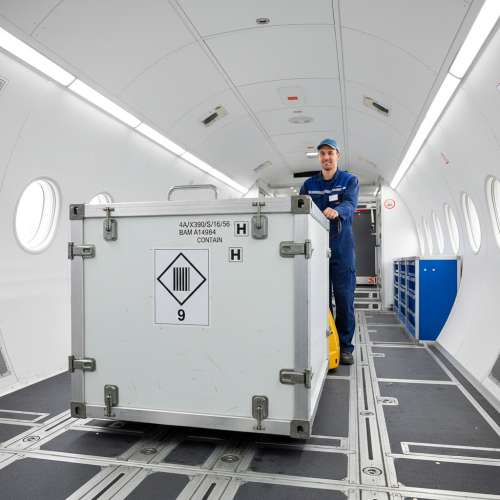
CATEGORIES OF REGULATED CARGO HANDLED
Chemicals, Batteries, Gases: Specialized Expertise Across All Industry Sectors
We regularly handle and transport dangerous goods across the following core product categories:
Chemicals & Industrial Manufacturing
Solvents, acids, bases, paints, inks, adhesives, resins, industrial cleaning agents, catalysts, and polymers.
Batteries & Consumer Electronics
Lithium-ion and lithium-metal batteries (smartphones, laptops, electric vehicles, power tools), lead-acid batteries, and button cell batteries.
Cosmetics & Fine Fragrances
Perfumes and colognes (alcohol content > 24%), aerosols (deodorants, hairsprays), nail varnishes, and removers.
Healthcare, Life Sciences & Laboratories
Infectious biological specimens, medical disinfectants, medical-grade alcohol, radioisotopes (medical imaging), and clinical waste.
Gases & Compressed Aerosols
Fire extinguishers, diving cylinders, medical gases (oxygen), industrial welding gases, and refrigerants (R134a, R1234yf).
Automotive & Transport Components
Airbag modules, seatbelt pretensioners, starter/traction batteries, brake fluids, and fuel contained within vehicle systems.
Food, Beverage & Agriculture
Spirits and high-proof alcohol (> 24% ABV), dry ice (for temperature-controlled preservation), and fermenting products generating pressure risk.
Construction, Building Materials & Energy
Hot-mix asphalt, industrial paints, gas cartridges, and site explosives (handled under specialized permits).
Hazardous Waste & Recycling
Chemical waste streams, spent batteries, waste electrical and electronic equipment (WEEE containing lithium), and Class 9 asbestos.
Trusted by Industry Leaders
The continued trust of prestigious clients worldwide






Roger Benaim: What Makes the Difference
Why Choose ROGER BENAIM for Your Regulated Goods & Dangerous Freight?
Our unique expertise in regulated freight rests on complete, end-to-end control of the logistics chain—from initial product analysis to final delivery:
Precise UN Identification: Rigorous classification of UN numbers and hazard classes to eliminate regulatory risk.
UN-Approved Packaging: Packaging tailored to each transit mode (Air Freight ≠ Ocean Freight), guaranteeing compliance and carrier acceptance.
Exhaustive Documentation & Marking: Flawless drafting of transport papers (DGD) and precise labeling of packages and shipping containers in line with international standards.
Coordination with Certified Partners: Network of certified ADR road hauliers, DG-compliant air carriers, and maritime shipping lines.
High-Security Roissy Hub: 1,500 sq m facility featuring segregated UN-class zones, fire suppression systems, retention basins, forced ventilation, and certified dangerous goods handlers.
Full Professional Accreditations: ADR, IATA, and IMDG certified, serving as your single point of contact across all transit modes.
Comprehensive Multi-Class Capability: Expert management across all dangerous goods classes—explosives, compressed gases, flammable liquids, lithium batteries, corrosive substances, infectious agents, and miscellaneous hazardous materials.
Our Added Value:
Complimentary Product Identification Audit: Many clients are unaware that everyday commercial goods—such as aerosols, lithium batteries, or fine fragrances—are classified as hazardous cargo. We identify them free of charge.
End-to-End Execution: Seamless, fully compliant, and secure transport management for all your sensitive freight.
Heritage & Experience Since 1955: Over 70 years supporting industrial manufacturers and exporters across the chemical, pharmaceutical, cosmetics, and electronics sectors.
Our Mission: To make the transport of dangerous and regulated goods reliable, secure, and straightforward—regardless of regulatory complexity.

Partner with Us Today
0M+
sq m Shipped
0+
Global Partners
0
Years of Expertise
What exactly is a dangerous good?
A good is considered dangerous for transport if it presents a risk to:
Human health (toxicity, corrosiveness, infection)
Public safety (explosion, fire, violent reaction)
The environment (pollution, toxic spill)
Property (corrosion, contamination)
The 9 UN classes:
Class 1: Explosives (6 divisions according to level of danger)
Class 2: Gases (flammable 2.1, non-flammable 2.2, toxic 2.3)
Class 3: Flammable liquids (flashpoint < 60°C)
Class 4: Flammable solids (4.1), spontaneously combustible (4.2), emit flammable gas in contact with water (4.3)
Class 5: Oxidising substances (5.1), organic peroxides (5.2)
Class 6: Toxic (6.1), infectious (6.2)
Class 7: Radioactive
Class 8: Corrosive (pH < 2 or pH > 12.5)
Class 9: Miscellaneous hazards (lithium, asbestos, magnets, goods > 100°C, GMOs, etc.)
Identification: Every dangerous product has a 4-digit UN number (e.g. UN 1170 = ethanol, UN 2794 = acid batteries).
Important: A product may seem harmless (perfume, deodorant, paint) but be classified as dangerous for transport due to its composition (alcohol, compressed gas, solvents). SDS Section 14 indicates the transport classification.
ADR, IATA, IMDG: What is the difference?
These are the 3 international regulations governing the transport of dangerous goods depending on the mode:
ADR (Road):
European Agreement, 52 signatory countries
Update: Every 2 years (latest = 2025)
Transport document: ADR Dangerous Goods Declaration
Placarding: Orange plates + hazard labels
Driver training: Mandatory, 5-year certificate
Responsibility: Mandatory Safety Adviser in the company if above thresholds
IATA DGR (Air):
International Air Transport Association Regulations
Update: Every year (latest = 2025)
Transport document: Shipper's Declaration for Dangerous Goods (DGD)
Restrictions: Stricter (passenger prohibitions, quantity limits)
Training: Mandatory every 2 years
Key feature: Ultra-strict lithium battery regulations
IMDG (Sea):
International Maritime Dangerous Goods Code (IMO)
Update: Every 2 years (latest = 2024)
Transport document: IMDG Dangerous Goods Declaration
Key feature: Segregation rules (incompatibilities between classes)
Container: 4-side placarding + packing certificate
Common basis: All 3 regulations are based on the UN Model Regulations (Orange Book), hence harmonised UN numbers and classifications. However, each mode adds its specificities according to constraints (road vibration, aircraft altitude, vessel movement).
Our added value: We master all 3 regulations and adapt according to the chosen mode.
Which documents are mandatory for shipping?
Documents vary depending on the mode, but some are universal:
ALWAYS mandatory documents:
Safety Data Sheet (SDS): Supplier document detailing composition, hazards, safety measures. Section 14 = transport info.
Shipper's Declaration: Standardised form (ADR/IATA DGD/IMDG) signed by a trained person, listing: UN number, proper shipping name, class, packing group, quantities, emergency phone number.
Packaging Certificate: Attestation that the packaging used is UN-approved (visible marking on the packaging).
Documents DEPENDING ON mode:
ADR: Instructions in writing (driver instructions in case of accident/emergency), ADR driver training certificate
IATA: Airline notification (classes 1, 6.2, 7), Air Waybill (AWB) mentioning "Dangerous Goods as per attached DGD"
IMDG: Container Packing Certificate, Bill of Lading (B/L) mentioning "IMDG Dangerous Goods"
Documents DEPENDING ON product:
Lithium batteries: UN 38.3 test summary declaration, IATA Packing Instruction manual (PI 965-970)
Infectious substances: Certificate of origin for biological materials, health authorization
Waste: Hazardous waste tracking form, proof of final destination
Archiving: Retention for 3 years minimum (regulatory obligation + traceability in case of incident).
We prepare all of these documents in compliance with regulations.
How do you handle the transport of lithium batteries and sensitive goods?
The transport of lithium batteries (classified under Class 9) is subject to very specific packaging and labelling rules. We ensure strict verification of container compliance and use adapted vehicles. For these high-risk goods, we follow the latest TMD (Dangerous Goods Transport) regulatory updates to prevent thermal incidents.
What is UN-approved packaging?
UN-approved packaging is a container tested and certified according to standardised protocols to withstand the constraints of transport.
Tests carried out:
Drop: Filled packaging dropped from a defined height (1.2 m to 1.8 m depending on group)
Stacking: Stacking load resistance (simulating storage)
Leakproofness: Internal pressure test (for liquids)
Internal pressure: Hydraulic test (pressure receptacles)
Mandatory marking on packaging:
Example: 4G/Y15/S/18/F/BAM 12345
Decoding:
4G= Packaging type (4 = box, G = fibreboard/combined packaging)Y15= Authorised packing group (Y = II and III) + gross mass limitS= Solids18= Year of last test (2018)F= Manufacturing country (France)BAM 12345= Certification body + number
Common packaging types:
Drums/Cans: Metal (steel/aluminium) or HDPE plastic, 5 L to 60 L
Barrels: Steel, plastic, or fibre, 25 L to 220 L
Jerricans: Plastic or metal, 10 L to 60 L
IBCs: Intermediate Bulk Container, 500 L to 1,500 L, on pallet
Boxes: Reinforced cardboard, wood, plywood
Validity period: 5 years after the last test. Reusable packaging if intact, marking legible, no deformation.
Important: Using non-approved packaging = serious violation. We provide approved packaging tailored to your product or validate your existing packaging.
Who monitors the compliance of my regulated shipments?
The safety of regulated goods allows no guesswork. That is why the Roger Benaim team maintains continuous oversight over the validity of transport documents (Dangerous Goods Declaration) and protocol compliance. Our experts are available to advise you on your product classifications and guarantee risk-free transport from both an administrative and logistical standpoint.
What safety equipment is present in your ADR vehicles?
Our transport units are equipped in strict accordance with ADR requirements: certified fire extinguishers, spill kits, personal protective equipment (PPE) for the driver, and regulatory placarding (orange plates, hazard labels). This preparation enables an immediate and effective response in the event of an anomaly.
FAQ
Answers to Your Most Common Questions
Sensitive Goods Dispatch: Maximum Security Guaranteed
Entrust Us with Your Sensitive Cargo
Chemical products? Lithium batteries? Compressed gases?
Our dangerous goods experts secure every step of your shipment.
Our Other Services